What Is Business Identity Infrastructure?
Every business requires infrastructure to operate. While most people think of infrastructure as offices, software, equipment, or employees, there is another form of infrastructure that exists long before any of those things are put into place: identity.
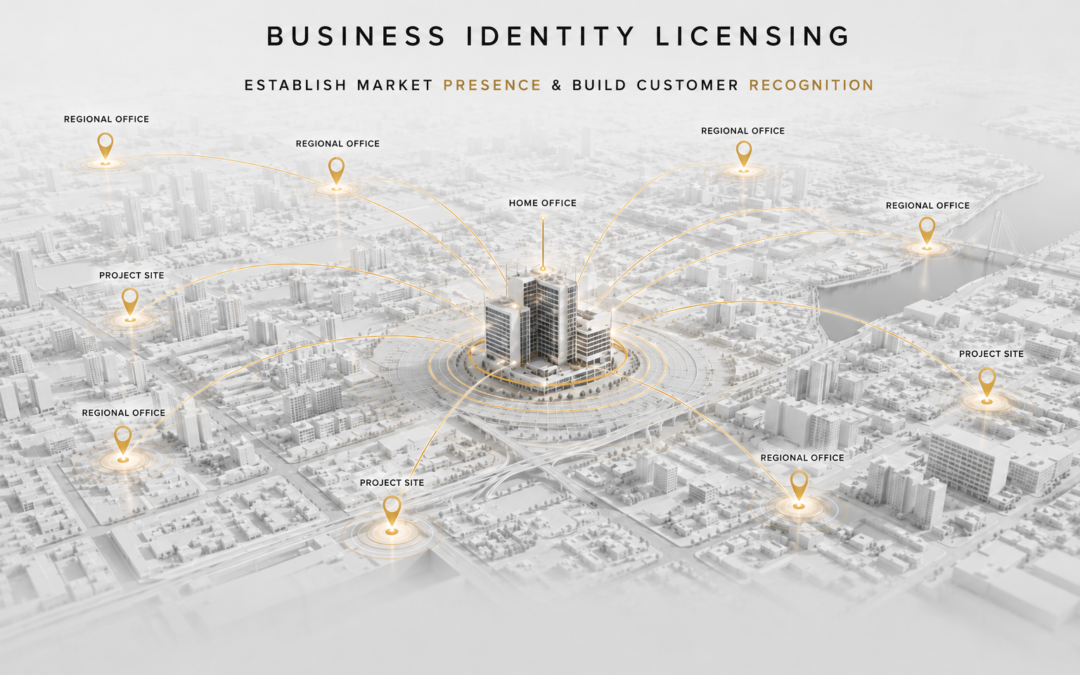
Business Identity Infrastructure is the strategic foundation that allows a business to be recognized, remembered, trusted, and discovered. It is the framework upon which branding, marketing, customer acquisition, and growth are built.
Identity Comes Before Everything Else
Before a customer visits a website, they encounter a business identity.
Before they evaluate a product, they see a business identity.
Before they decide whether to trust a company, they encounter a business identity.
In many cases, a prospective customer forms an opinion within seconds. The business name, domain name, and overall presentation create an immediate impression that influences how the company is perceived.
This is why identity is not merely a branding exercise. It is infrastructure.
Just as a building requires a foundation before walls can be erected, businesses require a recognizable identity before meaningful growth can occur.
The Hidden Layer of Business Infrastructure
Traditional business infrastructure includes:
– Accounting systems
– Customer relationship management software
– Operations processes
– Legal structures
– Employees and contractors
These systems help a business function.
Business Identity Infrastructure serves a different purpose. It helps a business be recognized.
Without recognition, even the most efficient company can struggle to attract customers, referrals, partnerships, and opportunities.
Identity serves as the entry point to every customer relationship.
What Makes Up Business Identity Infrastructure?
Business Identity Infrastructure consists of several interconnected components.
Business Name
The business name is often the first interaction a prospect has with a company.
Strong names tend to be:
– Memorable
– Easy to pronounce
– Easy to spell
– Relevant to their audience
– Capable of supporting long-term growth
Weak names often create confusion, require excessive explanation, or fail to communicate credibility.
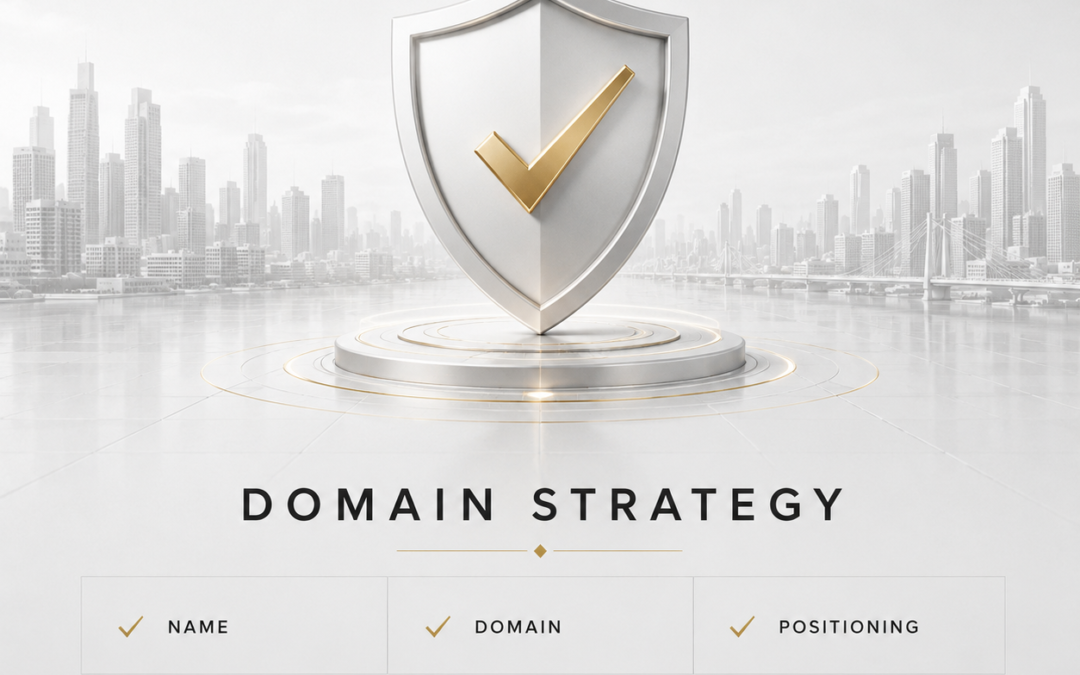
Domain Name
The domain name functions as the digital address of the business.
In today’s economy, customers expect businesses to maintain a professional online presence. A clear and relevant domain name helps establish legitimacy and improves discoverability.
A strong domain can reinforce the business name, simplify customer recall, and strengthen positioning.
Positioning
Identity is not simply what a company is called.
Identity also influences how a company is perceived.
Consider the difference between two hypothetical businesses:
– Metro Roofing Services
– Premier Commercial Roofing
Both may provide similar services. Yet each creates a different perception before a customer ever makes contact.
Identity influences positioning.
Consistency
The strongest business identities create consistency across:
– Website
– Email
– Marketing materials
– Social platforms
– Customer communications
Consistency reduces friction and increases trust.
Why Identity Is Often Overlooked
Many entrepreneurs focus heavily on marketing while giving little attention to identity.
The typical sequence looks like this:
1. Create a business.
2. Build a website.
3. Start advertising.
4. Try to generate leads.
The problem is that weak identities often reduce the effectiveness of every marketing dollar spent afterward.
Businesses frequently invest thousands of dollars promoting an identity that fails to communicate trust, clarity, or relevance.
Marketing can increase visibility.
It cannot automatically fix a weak identity.
Identity as a Strategic Asset
The most valuable business assets often share a common characteristic: they continue producing value long after the initial investment.
Business identity functions in a similar manner.
A strong identity can:
– Improve customer recall
– Increase credibility
– Strengthen positioning
– Support premium pricing
– Reduce customer hesitation
– Enhance marketing efficiency
Over time, these advantages compound.
This is why many established companies devote substantial resources to protecting and strengthening their identities.
They understand that identity is not merely a label.
It is an asset.
The Relationship Between Identity and Growth
Growth requires attention.
Attention requires recognition.
Recognition requires identity.
The relationship is straightforward.
Businesses that are easier to remember often receive more referrals.
Businesses that are easier to trust often convert prospects more efficiently.
Businesses that are easier to find often generate more opportunities.
Identity sits at the center of each of these outcomes.
A Different Way to Think About Business Growth
Many business owners ask:
“How can I grow faster?”
A more useful question may be:
“Does my identity support the growth I want to achieve?”
If the answer is no, marketing efforts may be fighting against the limitations of the identity itself.
Growth is easier when the underlying infrastructure supports it.
Final Thoughts
Business Identity Infrastructure is the often-overlooked foundation upon which successful businesses are built. Before branding campaigns, advertising strategies, sales funnels, or customer acquisition efforts can produce meaningful results, a business must first establish an identity capable of earning recognition and trust.
The strongest businesses understand that identity is not decoration. It is infrastructure. And like all infrastructure, its value becomes more apparent as growth begins to occur.